








HU
EN

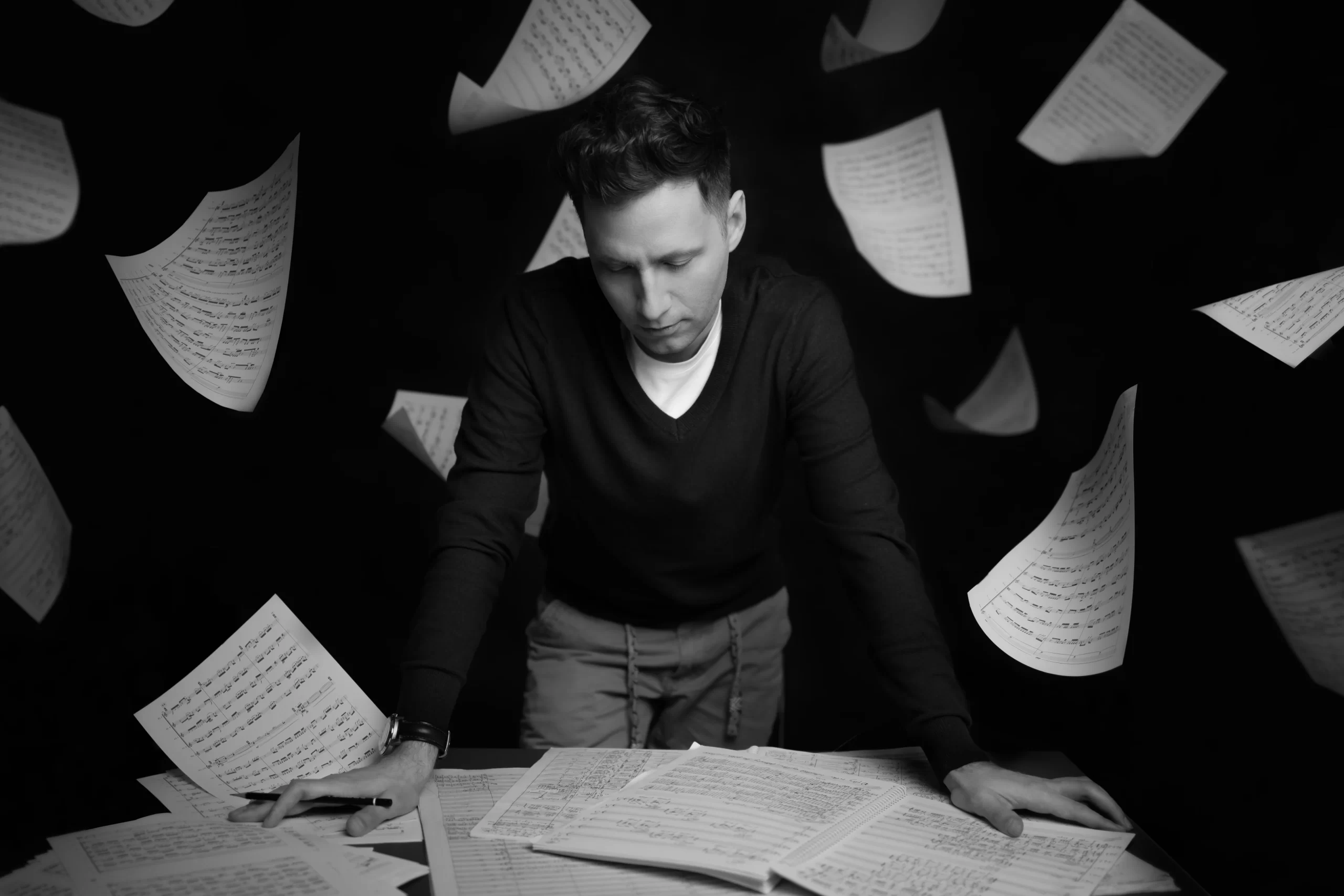
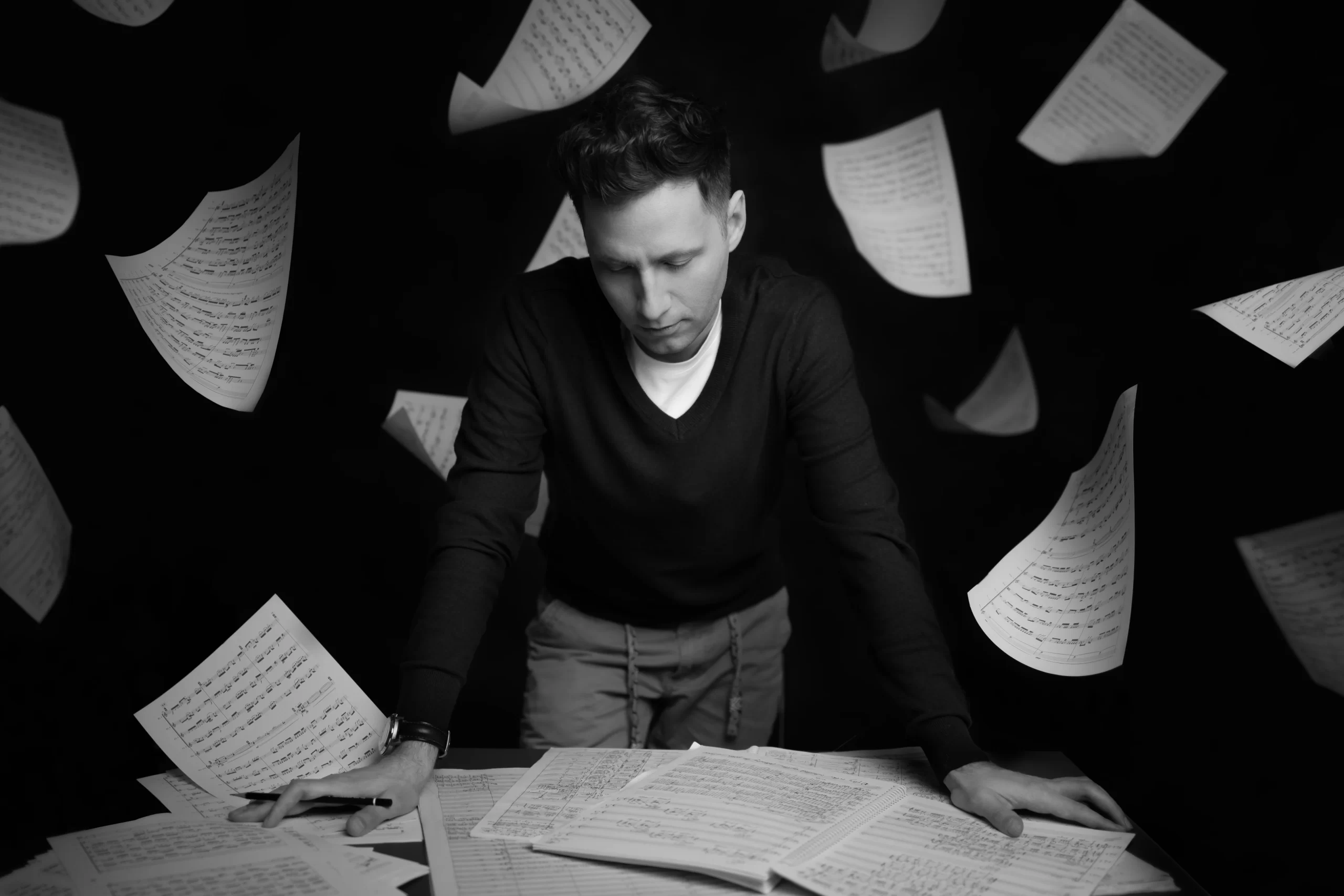
Máté Bella is one of the few composers who became a significant character of the Hungarian music scene before turning 35. His contemporary compositions are played by prominent international orchestras, his popular music tunes are favourites of several radio stations and his musical theatre pieces are performed on the stages of the most distinguished theatres in the country.

Máté Bella is one of the few composers who became a significant character of the Hungarian music scene before turning 35. His contemporary compositions are played by prominent international orchestras, his popular music tunes are favourites of several radio stations and his musical theatre pieces are performed on the stages of the most distinguished theatres in the country.

More bio
Apr 25

Leap into Celebration – USA

Saturday, Ritsche Auditorium Stewart Hall, St. Cloud State University
EVENT DETAIL
Jan 15

Voice/Word – Ask the Composer!

Thursday, ARSO Headquarters
EVENT DETAIL
Jan 10

Sounds and Colors – Studio5+ and the Budapest Strings

Saturday, Budapest Music Center
EVENT DETAIL
Dec 08

Hommage à Bartók – Juilliard & Bard

Monday, Casa Clara
EVENT DETAIL
No event found!
Load More
More events
More compositions
Fotó: Lenke Photography
Loading...
“Instead of Cynicism, I’m Interested in Believing in Things Again” Conversation with Composer Máté Bella

“Instead of Cynicism, I’m Interested in Believing in Things Again” Conversation with Composer Máté Bella

In pop music, every second matters, while classical music itself stands at a crossroads — says composer Máté Bella, associate professor at the Liszt Academy of Music, who moves naturally between contemporary experimental music and pop songs with over 50 million views. In this interview, Bella speaks about why he had to rewrite his first pop song seven times, how the “TikTok effect” is reshaping our brains, and why he believes a new sincerity is replacing postmodern cynicism. The conversation also touches on the differences between Chinese and European musical thinking, and why classical music risks becoming little more than “light music disguised as serious music” if it fails to reconnect with younger audiences.

In Hungary, is it considered natural for someone to compose both classical and popular music?

That really depends on the individual and their interests. Not every classical musician feels drawn toward popular music, and there’s certainly no obligation to do both. For me, it all started in 2013, when my manager suggested that I write a song for the Eurovision Song Contest. We were looking for a song for Lilla Polyák, and the idea came up: why shouldn’t a contemporary composer write a pop song?

At that time I had already been composing theatre music for the National Theatre under Róbert Alföldi, and I was also working with the Operetta Theatre and Víg Theatre, so I found the challenge exciting. But I quickly realized that listening to pop music and actually writing it are two completely different things.

What exactly is the difference? Many people tend to underestimate pop music because of its apparent simplicity.

The biggest difference lies in the handling of time. In pop music, every single second truly matters. Classical music operates with a very different perception of time, but in a pop song you only have three or four minutes to communicate emotions and intellectual content.

People often say it’s “just four chords,” but it matters enormously how those chords are configured. If you want a song to create an emotional impact on large audiences, you have to understand the genre’s internal framework. I remember rewriting that very first song seven or eight times before it finally came together.

Has this shortening of attention spans also affected classical music? Are audiences no longer able to sit through a 40-minute symphony?

Attention spans are definitely shrinking; we’re clearly moving in a “TikTok direction.” But I don’t believe in cultural decline. The world and its trends are simply changing, and those who can intellectually adapt to these shifts are fortunate.

In my own composing, I try to combine intuition with intellectual structure. Earlier in my career, I thought too rigidly in systems and constructions, but eventually I realized that a strong composition has to engage listeners on both levels. For me, artistic music begins where those two dimensions come into balance, even if the proportions constantly shift.

Have you faced criticism from the classical music world for moving toward pop music?

I’m sure there has been criticism, although not everything reached me directly. In classical music circles, pop music has traditionally not been viewed very positively; it’s often treated merely as “dance music.”

At the same time, I think these are global tendencies rather than specifically Hungarian ones. Recently I listened through the 100 most-streamed Chinese pop songs on Spotify, and it felt like entering a completely different sonic world. European ears perceive music differently — we tend to prefer a rougher, more textured and “spicier” sound aesthetic.

Since you mentioned China: you also teach Chinese students at the Liszt Academy. How different is their way of thinking from ours?

The difference is enormous. European society is fundamentally individualistic — for us, it’s important that the individual separates themselves and creates something unique. Chinese society is much more collectivist, and their educational system reflects that as well. Among many of my Chinese students, finding an individual artistic voice is less emphasized.

At the Liszt Academy, however, the presence of popular music has become increasingly natural. Some of my students in the applied composition program are members or songwriters of bands such as Blahalouisiana or Margaret Island. We try to give them practical knowledge that helps them sustain a career, and it’s fascinating to see how their musical thinking can be integrated into a classical environment.

How has your experience in pop music influenced your classical compositions?

Today I write shorter pieces. One of my symphonies, for example, is only fifteen minutes long. There are practical reasons for this as well: in European musical life, a new work often receives only three rehearsals plus a dress rehearsal. If a piece is too difficult or too long, it simply cannot be fully realized within that timeframe, and the performance inevitably suffers.

COVID also changed a great deal. Budgets shrank, and audience expectations shifted. It has become harder to attract people to concerts without a strong thematic concept. Curated evenings — where literature, visual arts, or contemporary music intersect — tend to work much better today.

What are you currently working on?

I’m currently working on a Passion based on a libretto by András Almási-Tóth. It’s a two-hour opera-oratorio — a sacred work, though not necessarily intended for a church setting; I imagine it more on an operatic stage.

This project has fundamentally changed my musical thinking. I’ve moved toward a kind of metamodern sensibility. Instead of postmodern cynicism and irony, I’m increasingly interested in a kind of “new naivety” — the idea that we might once again believe in things and dare to express emotions sincerely. I’m searching for crystal-like structures and simplicity.

What lasting legacy did the great experimental schools of the 20th century — such as Darmstadt — leave behind?

Perhaps the most important development was that timbre became an equal musical parameter alongside rhythm and pitch. This timbre-oriented way of thinking — sonorism — still has a strong influence today, especially in ensemble composition.

A smaller ensemble is like a horse: agile and responsive. A large orchestra, by contrast, is more like a whale — something massive that must be carefully ridden and guided.

What do you think about technological trends? Is it possible to write a meaningful “TikTok symphony”?

I think that can only work if it develops organically rather than through forced trend-following. I don’t believe people today are more superficial than before — we’re simply exposed to an overwhelming amount of stimuli, and dopamine addiction, the constant hunger for likes and feedback, is literally reshaping our brains.

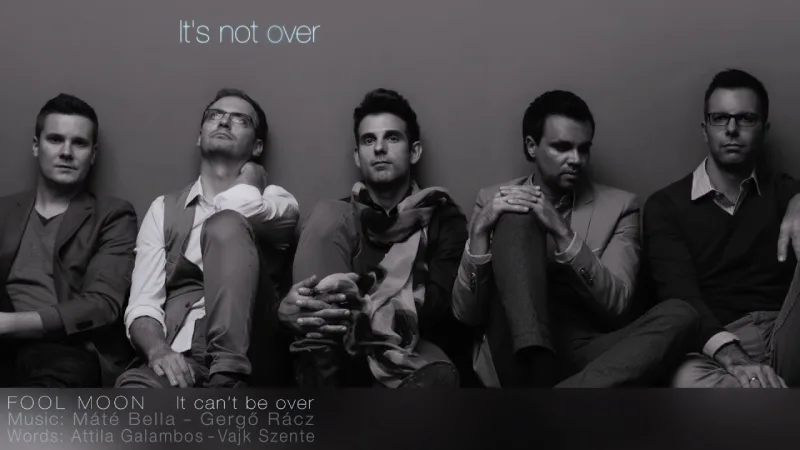
I experienced this contrast very directly when Gergő Rácz and I wrote the song Mostantól (“From Now On”), which surpassed 50 million views. Meanwhile, some of my contemporary classical works, such as Hesperus, may only receive a few thousand views on YouTube.

Does that ever frustrate you? That millions hear one piece while only a few hear the other?

Not really, because I understand what each represents. For me, sincerity is the most important thing. Through music, I want to communicate my own thoughts and emotions. If there’s any posing involved, audiences will eventually sense it.

It’s fascinating how cultural existence today is largely determined by digital presence. If something isn’t on Spotify or Apple Music, it almost feels as though it doesn’t exist. I once had a Chinese student who discovered me simply because they liked the visual design of my website.

Péter Eötvös called this “aftercare”: today, composers are responsible not only for writing the piece itself, but also for its distribution and presentation.

You mentioned Hesperus. What is that piece about, and where does the title come from?

It’s a viola concerto inspired by the evening star — Hesperus in Greek mythology. I became fascinated by the way starlight flickers and oscillates as it passes through the atmosphere. I wanted to capture those shimmering effects musically.

Many people think compositions need to be explained, but I believe that if a piece truly affects you, it can do so without explanation. Of course, the listener’s state of mind also matters. Even I am often surprised by what AI algorithms throw at me. I frequently encounter pieces that are “almost good,” but lack that singular artistic identity capable of provoking genuine emotion.

Returning to the success of Mostantól: why do you think the song resonated so strongly?

Perhaps because we managed to capture the emotional dynamics of infidelity in an honest and natural way, without artificiality. Szabolcs Hujber and I worked extensively on the lyrics to tell the story in a direct and accessible manner — something many listeners could personally relate to.

I also pay attention to popstars like Azahriah, whom I see as a very professionally constructed artistic project. In today’s world, it’s completely valid to approach art as a project, and I often think similarly when taking on commissions.

Is there a pop artist you particularly admire?

Billie Eilish seems sympathetic to me because her career emerged organically from a family-based creative environment, unlike the industrialized structure of South Korean K-pop. In K-pop, there are practically manuals for transforming dancers into singers — for me, that feels overly manufactured.

I’m drawn to things that emerge honestly from garages and small communities. At the same time, one also has to know when to stop. I recently saw a concert by System of a Down, and it was somewhat sad to watch aging musicians trying to recreate the same explosive energy of their youth. There’s wisdom in knowing when to step away.

What do you think the future of classical music looks like? What is the key to survival?

The most important task is finding ways to engage younger generations and truly integrate them into musical culture. The children’s matinée concerts of the Budapest Festival Orchestra are a wonderful example: children could sit among the musicians on beanbags and experience the music from within the orchestra itself.

We need to discover thematic formats that genuinely attract audiences. Otherwise, the “slice of the cake” occupied by classical music will continue shrinking, until all that remains is “light music disguised as classical music.”

At the same time, composers like Ludovico Einaudi or Max Richter demonstrate how strongly emotionally driven music can resonate with younger audiences on social media. Richter’s Sleep, for example — an eight-hour composition designed around the phases of sleep — is a brilliant concept that truly works.

  • Szatmári Róbert, Enyhe Katarzis
  • 2026. 05. 15
“The point is not to write contemporary music, but to write TRUE music!” Composer Máté Bella in conversation with Bálint Gyombolai

“The point is not to write contemporary music, but to write TRUE music!” Composer Máté Bella in conversation with Bálint Gyombolai

The Dunakeszi Local History Collection and Library, in collaboration with the Ferenc Kölcsey City Library, has launched a new lecture series titled Lí/yra: Music plus Literature. The aim of the series is to explore the intersections between music and literature by inviting artists whose work is deeply connected to both fields. The first guest was composer Máté Bella

Despite his relative youth, Bella is already regarded as one of the defining figures of 21st-century Hungarian composition. As he remarked at the beginning of the discussion: “Perhaps János Vajda once said that a composer is considered a young talent until the age of fifty, and immediately afterward becomes one of the nation’s grand old masters. At forty, I still belong to the ‘young talent’ category.”

A recipient of the Junior Prima Prize, the Ferenc Erkel Prize, the Bartók–Pásztory Award, and the Artisjus Prize, Bella is best known for his chamber and vocal works, though his output also includes orchestral compositions and pop songs. His stylistic breadth makes him an ideal guest for a series devoted to exploring the boundaries between genres and forms of expression.

Bella’s musical path began early. After attending a music-specialized primary school, he continued his studies at conservatory level before enrolling in the Liszt Ferenc Academy of Music, where he graduated in composition. Among his most influential teachers were Miklós Kocsár, György Orbán, and Gyula Fekete. He earned his doctoral degree at the Academy in 2018 and now teaches there himself. For Bella, teaching is as much a vocation as composing.

Breaking the rules

The conversation also touched on the relationship between craft and intuition. According to Bella, composition—like writing—exists on many levels. While talented amateurs certainly exist, writing for symphony orchestra or composing contemporary works requires rigorous professional training. At the same time, technical mastery must not come at the expense of spontaneity.

When asked whether formal training risks trapping composers in formulas, Bella responded candidly:
“The entire profession struggles with how to forget what it has learned—or at least how not to be constrained by rules. To create new art, we must constantly break the rules.”

Gyombolai also asked how Bella is able to move so fluently between different genres. The composer describes his career in distinct creative periods, each reflecting shifts in his personality and thinking. As his perspective evolved, so did his musical language: the emphasis changed, and his expressive vocabulary became more nuanced. Yet one principle has remained constant. As he put it:
“The point is not to write contemporary music, but to write TRUE music.”

The search for truth and authenticity has remained a central driving force throughout his work.

A Hungarian composer on the international stage

The relationship between music and literature plays a central role in Bella’s oeuvre. During the event, the audience heard an excerpt from his 2009 composition based on Lőrinc Szabó’s poem Zhuangzi’s Dream. Written primarily for professional audiences and contemporary music festivals, the piece reflects the composer’s artistic thinking at the time.

The poetry of Gyula Juhász has also had a profound impact on Bella. He describes Juhász’s verse as both accessible and stylistically unified, and has set several of the poet’s works to music. At one point, he actively sought out Juhász poems that would lend themselves to musical adaptation.

One particularly notable moment in his international career came in 2014, when the European Concert Hall Organisation (ECHO) organized a major commemorative concert in Paris marking the centenary of the outbreak of World War I. Fourteen composers—one from each participating European country—were commissioned to write a choral work in their native language. Bella represented Hungary, composing a mixed-choir piece based on Juhász’s poem Peace. His work was ultimately selected as the closing piece for the combined choir and performed in Hungarian by singers from across Europe. To prepare the performers, Bella recorded and sent a pronunciation guide in advance.

Beyond the myth of candlelit inspiration

The discussion also addressed whether one can speak of a recognizable “Máté Bella style.” According to the composer, such a style does exist, though not in the form of recurring motifs or easily identifiable musical signatures. Each genre involves different performers, audiences, and artistic contexts, which naturally shape the compositional approach. What remains constant is not the surface, but the underlying artistic mindset.

Bella also sought to dispel the romantic myths surrounding composition.
“Composers are often surrounded by mythology, but it’s important to strip that away,” he explained. “Being a composer is solitary and demanding work. I wish I could say that composing means sitting at the piano in candlelight and simply writing down ideas whispered by Pallas Athena or some divine force.”

The reality, he emphasized, is disciplined, sustained effort: experimentation, revision, false starts, setbacks, and breakthroughs.

For Bella, the greatest reward comes when a piece is finally performed and he can experience it as a listener. That moment, he believes, is what makes the entire process worthwhile.

His working methods are equally diverse. He composes in traditional ways—at the piano, with pencil and manuscript paper—but also makes extensive use of modern composition software. During the event, the audience was given a glimpse into how a piece takes shape step by step in the digital environment.

At the end of the evening, Bella answered questions from the audience, bringing the event to a close. The conversation offered not only insight into the career of a major contemporary composer, but also a vivid illustration of how music and literature continue to intersect in 21st-century artistic practice.

  • Gyombolai Bálint, Dunakeszipost.hu
  • 2026. 02. 27
Dead Elvis! Frankenstein!! Cheerleaders!

Dead Elvis! Frankenstein!! Cheerleaders!

Composer Máté Bella on metamodernism, artificial intelligence, pop hits, and the role of the piano. PODCAST.

https://gondolatkerteszet.substack.com/p/dead-elvis-frankenstein-cheerleaderek

HOW DO CHEERLEADERS END UP ON THE CONTEMPORARY STAGE?

In the audience's mind, the idea of contemporary new music is still largely shaped by the intellectual legacy of the 20th century—modernism and other "isms" accompany us. But today, the situation is different: 21st-century new music represents other music-aesthetic principles, says composer Máté Bella. He embodies a new kind of convergence in both his person and work (he is a professor at the Liszt Academy, the author of nationwide pop hits, a composer for renowned classical music ensembles, and a teacher of trained composers from Hungary’s leading pop/rock scene). In their work, the worlds of classical and popular music meet.

This conversation provides a perfect insight into the intellectual and musical background of a "contemporary" modern work, making it equally interesting for both professionals and casual listeners. As does the discussion of other topics we touch upon:

  • What is metamodernism and what does it mean for music?
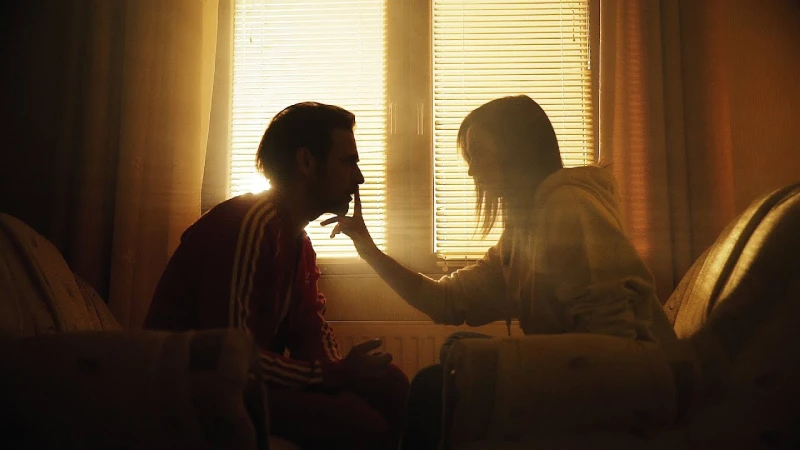
  • How was Cheerleaders created?
  • Loops, grooves, and what’s considered uncool
  • The impact of artificial intelligence on contemporary/classical music composition
  • How one of the biggest pop hits of the early 2020s was born
  • What collegial advice helped a classical composer write a pop hit?
  • The encounters and potential future collaborations between pop and classical music scenes
  • Where does the piano stand in the 21st century?

The conversation features an excerpt from Cheerleaders and presents the composer’s piano piece Judas in full!

  • Gergely Horváth, Gondolatkertészet / ThoughtGardening
  • 2024. 09. 25
more press
Facebook-square Instagram Youtube
Impressum

Direct Contact:

Máté Bella
info@matebella.com

Manager:

Vera Meczner
+36 30 558 8698
vera.meczner@gradusartist.com
www.gradusartist.com

Facebook-square Instagram Youtube
Impresszum
  • Bio
  • Events
  • Works
  • Photos
  • Press
  • Contact
  • Bio
  • Events
  • Works
  • Photos
  • Press
  • Contact
Facebook-square Instagram Youtube
A jobb felhasználói élmény érdekében az oldalon cookie-kat használunk. Oldalunk használatával, Ön elfogadja a cookie-k használatát.OKNem